Table of Contents
After a serious accident in Huntington, determining that another person was negligent is only part of a personal injury case. West Virginia law also asks an equally important question: Did the injured person share any responsibility for what happened?
The answer can substantially reduce compensation—or prevent recovery altogether.
West Virginia Code §55-7-13a establishes a modified comparative-fault system for personal injury, property damage and wrongful-death claims. Under that system, responsibility may be expressed as percentages and allocated among plaintiffs, defendants and, in some circumstances, nonparties who proximately caused the damages. Federal Bureau of Investigation
That makes understanding the West Virginia 51% fault rule particularly important after a car, motorcycle or commercial-truck accident.
What Does the West Virginia 51% Fault Rule Actually Say?
The phrase “51% fault rule” is useful shorthand, but the statute is more precise.
Under West Virginia Code §55-7-13c, fault attributed to an injured plaintiff does not prevent recovery unless the plaintiff’s fault is greater than the combined fault of all other persons responsible for the damages. When the plaintiff’s fault is lower than the combined fault of everyone else, the recovery is reduced proportionately. Federal Bureau of Investigation
Consider a simplified example.
A Huntington driver suffers $100,000 in compensatory damages after a collision. If the injured driver is determined to be 20% at fault and another driver 80% at fault, the plaintiff’s damages would be reduced by 20%, leaving $80,000.
But fault approaching or crossing the statutory threshold can change the result dramatically.
This is why a disagreement over seemingly small details—vehicle speed, lane position, turn signals, following distance or whether a driver was distracted—can have major financial consequences.
How Is Fault Determined After a WV Accident?
Fault is not determined solely by what one driver says happened.
Evidence can include photographs and video, vehicle damage, witness testimony, electronic vehicle data, medical records, cellphone records when legally obtainable, physical evidence at the scene and expert accident reconstruction.
West Virginia law also places the burden of alleging and proving comparative fault on the person attempting to establish it. Federal Bureau of Investigation
That matters when an insurance company or defendant argues that an injured person contributed to the collision.
Can Someone Who Broke a Traffic Law Still Recover?
Possibly.
West Virginia Supreme Court precedent has long recognized that violation of a safety statute can constitute prima facie evidence of negligence, but the violation must also be connected to the injury through proximate causation. A statutory violation is therefore not automatically the end of the civil case. West Virginia Courts
For example, evidence that a driver crossed the centerline, failed to maintain adequate brakes or violated another applicable traffic-safety requirement may be highly relevant. But the entire circumstances of the crash still matter.
Why Comparative Fault Matters in Huntington Accident Cases
West Virginia recorded 29,526 traffic crashes in 2023, including 801 serious injuries and 260 fatalities, according to the state’s 2024 Governor’s Highway Safety Program Annual Report. WV DOT
Every collision has its own facts. Some involve straightforward negligence. Others involve competing allegations between multiple motorists.
This can be particularly important in intersection crashes, chain-reaction collisions, motorcycle accidents and commercial-truck cases where several people or companies may have contributed to the loss.
There May Be More Than Two People in the Fault Equation
West Virginia Code §55-7-13d provides for consideration of the fault of persons who contributed to the damages, including certain nonparties. A defendant seeking to allocate fault to a nonparty generally must comply with statutory notice requirements, including a 180-day-after-service provision described in the statute. Federal Bureau of Investigation
This creates a much more complicated question than simply asking, “Which driver caused the crash?”
A serious truck collision, for example, might raise issues involving the truck driver, motor carrier, another motorist or another potentially responsible person or entity.
West Virginia Generally Uses Several Liability
Another important provision is §55-7-13c’s rule that each defendant generally bears responsibility for compensatory damages in proportion to that defendant’s percentage of fault rather than automatically becoming responsible for the entire award. The statute contains exceptions, including provisions involving certain DUI-related conduct, criminal conduct and other specified circumstances. Federal Bureau of Investigation
That makes accurately identifying every potentially responsible party especially important in complex accident litigation.
Protecting Yourself From an Unfair Fault Allocation
Statements made immediately after an accident can matter. So can photographs, witness information and other evidence that may disappear with time.
Woelfel & Woelfel LLP’s Huntington practice emphasizes early investigation and preservation of accident evidence. The firm reports more than 60 years of combined litigation experience and represents clients in automobile, truck and motorcycle accident cases. Woelfel Personal Injury
If an insurer or another driver alleges that you caused part of an accident, the percentage ultimately assigned to you could directly affect your ability to recover.
How Long Do You Have to Bring a WV Personal Injury Claim?
West Virginia Code §55-2-12 generally provides a two-year limitation period for personal-injury actions, although particular circumstances can affect deadlines. Federal Bureau of Investigation
Waiting also creates a practical problem: evidence can disappear long before a statute of limitations expires.
Understanding the West Virginia 51% fault rule is therefore only part of protecting an injury claim. Determining what happened, preserving evidence and accurately identifying every responsible party can ultimately make the difference between meaningful compensation, reduced compensation and no recovery.
Final Thoughts
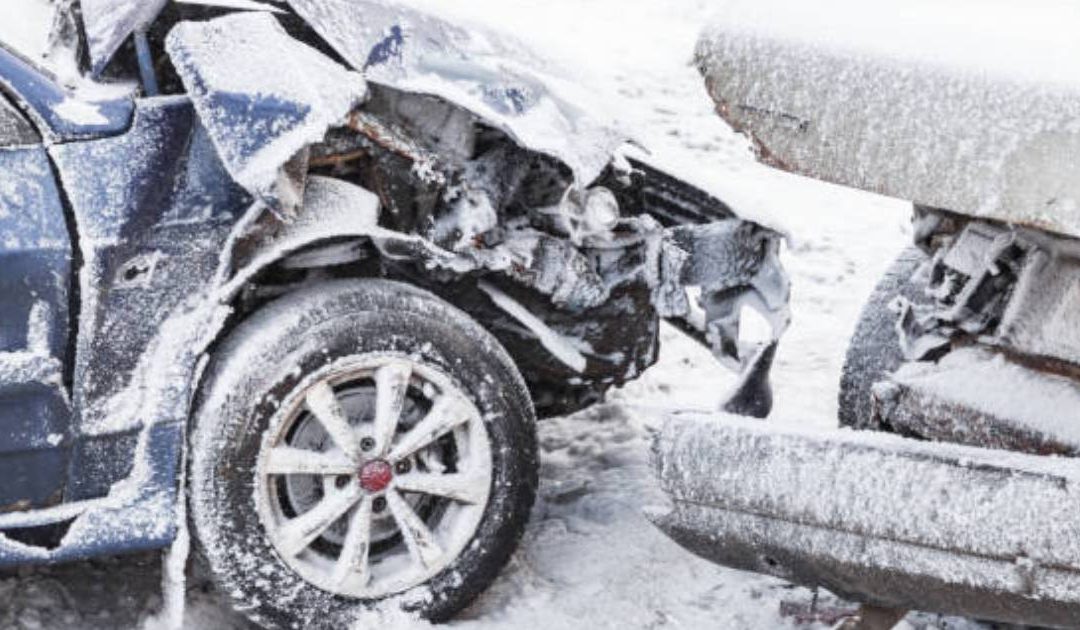
Winter driving hazards in WV create dangerous conditions that lead to serious accidents every year. While snow and ice play a role, drivers are still responsible for operating their vehicles safely.
Understanding how to stay safe and knowing what to do after a crash can protect both your well-being and your legal rights.
If you’ve been injured in a winter accident, taking immediate action and seeking legal guidance can help ensure you receive the compensation you deserve.
Read More: Explore our guides on What to Do After a Car Accident in Huntington, West Virginia in 2026 and Tri-State Personal Injury: What You Need to Know After an Accident to learn more about protecting your recovery after a serious collision. You can also connect with us on Social Media (click here).